Il Master è dedicato a Grazia Deledda, unica donna italiana ad aver ricevuto il premio nobel per la letteratura nel 1926.
L’ottenimento di questa certificazione internazionale (i corsi saranno solo in inglese) assicurerà a tutti gli aspiranti scrittori e giornalisti un chiaro vantaggio su tutti coloro che ne saranno sprovvisti.
Ecco i dettagli del corso:
Based in Oristano, Sardinia, and inspired by the legacy of Grazia Deledda, Nobel Prize in Literature.
It is about to begin. A low-residency graduate program taught in English, combining intensive residencies with individual mentoring and guided by an internationally established faculty. Offered by SSML San Domenico, in Rome, an higher education institute authorized by the Italian Ministry of Education, University and Research and taught by with an impressive number of teachers and writers.
The Deledda Master’s in Creative Writing & Translation is an international graduate program designed for writers and translators at various stages of creative development, including adult learners and working professionals. The program offers a rigorous yet flexible framework for advanced literary work, combining intensive in-person residencies with long-term individualized mentoring. Students can pursue sustained creative practice while continuing their professional and personal lives.
Rooted in Sardinia, the Master provides a setting that encourages focus, depth, and reflection – essential conditions for serious writing and translation. Our distinctive approach combines academic rigor with the flexibility needed by working professionals. The low-residency format features one-week intensive residencies combined with structured mentoring at a distance. The international faculty includes writers, translators, and educators of established international reputation. Creative writing is the core discipline, with literary translation introduced progressively. The program offers a distinctive cultural context, fostering cross-cultural perspectives and long-term intellectual exchange.
Per maggiori dettagli e informazioni visitate il sito https://deleddamaster.com
Il prossimo 17 maggio la seta ritornerà a Verona con una presentazione al Museo di Storia Naturale.
Un convegno per parlare di seta. Dalle 15.30 alle 17.30 s’avvicenderanno degli esperti relatori: Leonardo Latella, Silvia Cappellozza, Anna Paini, Pietro Spellini e Davide Boschetti.
Il progetto è supportato dall’Università di Verona, dal Gruppo Mic, da Fondazione Cariverona, dal Museo della Seta Don Mazza, dall’Azienda Agricola Piero Spellini e dal Comune di Verona.
Durante i prima anni del ‘900 i paesi che producevano più seta a livello mondiale erano l’Italia, la Cina e il Giappone. E il grande numero di piante di gelso ancora presenti nelle nostre campagne mostrano che anche nel veronese se ne produceva molta.
Dalla classifica delle superpotenze seriche l’Italia e il Giappone sono praticamente sparite, e data la grande manualità richiesta da quest’arte antica è probabile che la tendenza negativa non potrà essere mutata.
Si sta comunque tentando di far rivivere una produzione di nicchia e di alto livello, sfruttando le conoscenze acquisite in 2000 anni di storia. Un impianto pilota, seguito da Giancarlo Conti e Gaetano Zanotto, è già stato attivato a Povegliano e presto produrrà la prima seta.
Giulio Cesare, che fu anche un esteta e un modaiolo, si presentò per primo in Senato con una stupenda e costosissima toga di seta, arrivata a Roma dalla Cina, suscitando invidia negli altri togati vestiti di umile canapa. La seta è stata uno dei tanti regali fatti dalla Cina (conosciuta anticamente come Seres, ossia il paese della seta) al mondo intero, come la carta, l’inchiostro, la bussola e la polvere da sparo.
Angelo Paratico
Monarchical dictatorship or diarchy with fascism? The Japanese model
by Ambrogio Bianchi
The Veronese publishing house Gingko Edizioni recently published a highly original book by Angelo Paratico entitled ‘Un Re e il suo burattino. Vittorio Emanuele III e Benito Mussolini’ (A King and his Puppet: Vittorio Emanuele III and Benito Mussolini). The originality of this work lies entirely in its attempt at a critical review, based on diaries and accounts of secondary figures from the twenty-year period, which bear witness to the cordial relations between the King and the Duce of Fascism. The King and Mussolini met twice a week for a couple of hours, and all current domestic and international issues were put on the table during those meetings. In fact, without the King’s signature, Mussolini had no power. It was a situation similar to that of other Italian prime ministers, such as Cavour, Giolitti, and Crispi.
The first chapter of this book deals with the Emperor of Japan, Hirohito, who found himself in a situation similar to that of Victor Emmanuel III and who got out of it by shifting his grave responsibilities onto the generals who surrounded him. The narrative spread in Japan had always been that Hirohito was controlled by a military clique and that he actually had no power. This narrative collapsed in 2000 with the publication of Herbert Bix’s Pulitzer Prize-winning book Hirohito and the Making of Modern Japan. Bix, consulting the diaries of secondary figures in the regime, discovered that the emperor was in fact in charge of all Japanese war operations, no more and no less than Hitler in Germany.
Despite hiding behind constitutional technicalities, Victor Emmanuel III was the most disastrous Italian of the 20th century. Much of Italy’s misfortune was determined by the small Savoy monarch, who should have been tried at the end of the Second World War, but Winston Churchill vetoed this. Contrary to popular belief, Italy’s entry into the war on 24 May 1915 was not inevitable but was organised by Victor Emmanuel III, in defiance of Parliament and the will of the people, following the secret signing of the Treaty of London, which the Bolsheviks did not make public until 1917. To enter the conflict, the king did not hesitate to override his constitutional prerogatives, and he would do the same on 28 October 1922, 10 June 1940, 25 July 1943, and 8 September 1943. The reasons for his behaviour are to be found in his psychological defects, which had never been adequately studied before. So why did he choose a former left-wing extremist like Mussolini as Prime Minister? Paratico explains it this way: ‘At the end of the war, the maximalist wing of the left occupied the factories, blocking the country and appropriating the means of production. To protect the status quo, veterans of the Great War intervened, who were united and then used by a radical socialist, educated on the writings of Georges Sorel, Gustave Le Bon, and Karl Marx. That man was Benito Mussolini, and the King, who admired him despite finding him uneducated and crude, became convinced that he was the man he needed to keep himself on the throne, a sort of phosphorescent General Diaz’.
Various opinions about Mussolini are also reported, which should discourage any revanchist intentions. For example, Franco Bandini, a renowned right-wing writer, describes Mussolini in these words: ‘After the war, Mussolini proved to be extremely useful, at least within the nation, so much so that if he had not existed, it would have been necessary to invent him. None of the accusations made against him, none of the biographies written about him will ever be able to fully convey the incredible obtuseness of this nefarious man: his total ignorance of even the most superficial problems of society, the fatuity and indecisiveness of his judgement, his complete psychoanalytic dependence on the mediocre personalities he encountered’.
The text also contains various little-known curiosities about the King’s personality, which show how deep the shadow surrounding him was. For example, he almost certainly thought in English and then translated into Piedmontese and Italian. This was because, until the age of twelve, his governess was an Irish widow, Elizabeth Lee, known as Bessie.
It is said that after the March on Rome, when Mussolini met the King, he said: ‘Your Majesty, I bring you the Italy of Vittorio Veneto’. In reality, this phrase was never uttered and must be part of the fascist legend constructed after the event, according to Giacomo Acerbo, who was present at the meeting. Nor is it true that Armando Diaz said that the army was loyal, but that it was better not to test it. The King denies this, saying that on 28 October he did not consult with any generals. But perhaps it is true that he consulted with his very fascist mother, Queen Margherita.
The Italian situation was very similar to that of Japan, and, astonishingly, two generations of historians have failed to notice this. We now believe that this booklet will change history and lead many to a critical re-evaluation of the figure of Vittorio Emanuele III and the diarchy with fascism.
Carl (o Karl) Spitzweg (Unterpfaffenhofen, 5 febbraio 1808 – Monaco di Baviera, 23 settembre 1885) è stato un pittore tedesco di stile Biedermeier nonché una delle figure più importanti della vita culturale tedesca del XIX secolo.
Appartiene alla corrente artistica nota in Germania come Biedermeier un movimento artistico e ornamentale sviluppatosi tra il 1815 ed il 1848. Il termine stesso si diffuse attorno al 1850 come dispregiativo, preso in prestito da un personaggio dei poemi pubblicati sulla rivista satirica bavarese Fliegende Blätter dal medico Adolf Kussmaul e dall’avvocato Ludwig Eichrodt, e stava ad indicare il piccolo borghese apolitico e conservatore, interessato solo alla propria vita familiare. È composto da due parole, cioè l’aggettivo “semplice”, “sempliciotto” (bieder, ma che significa anche “integro”, “onesto”) unito a uno dei cognomi tedeschi più diffusi Meier (o Maier).
Carl Spitzweg resta uno dei pittori tedeschi più amati, rispettati e riprodotti. Il suo quadro che preferisco? senza dubbio è “Il povero poeta”(Der arme Poet) forse perché vedo un po’ di me stesso in questa commovente rappresentazione.
A Roma esistono ancora i ventotto gradini di pietra che Gesù Cristo salì per raggiungere il Pretorio dove stava Ponzio Pilato. Fu dopo averli saliti che nei Vangeli troviamo riportato il drammatico discorso diretto avvenuto fra Lui e Pilato.
Nel Santuario, affidato alla custodia dei padri Passionisti, si conserva anche l’antica cappella privata dei Papi, detta “Sancta Sanctorum”.
Il santuario si trova a pochi passi dalla Basilica di San Giovanni in Laterano dove fino al XIV secolo, prima della cattività avignonese, sorgeva l’antica residenza dei Papi. Quei ventotto gradini furono fatti trasportare a Roma dalla madre dell’imperatore Costantino, Sant’Elena, che visitò la Terra Santa tra il 327 ed il 328, effettuando numerose ricerche per ritrovare i veri luoghi della vita di Gesù, che l’aveva tanto appassionata.
In occasione dell’Anno Santo sono state tolte tutte le vecchie assi in legno che proteggono gli scalini marmorei e dopo 300 anni sarà possibile poggiare le ginocchia dove Gesù pose il suo piede.
Da piazza San Giovanni in Laterano si può entrare in questo luogo straordinario visitato da milioni di pellegrini provenienti da tutto il mondo. Il Santuario risale all’epoca di Papa Sisto V che lo istituì nel 1590 con la bolla Cum rerum singolarum. Un anno prima il Pontefice aveva chiesto a Domenico Fontana di traslare, in una sola notte, la Scala Santa dal lato nord dell’antico Patriarchio al luogo in cui oggi è collocata, al centro di altre quattro scale. Abbiamo notizie certe che fin dall’anno Mille questi ventotto gradini siano stati identificati dai pellegrini come quelli saliti da Cristo, quando venne giudicato e condannato a morte nel Pretorio di Gerusalemme.
Negli scalini si notano ancora i segni del passaggio dei pellegrini, inginocchiati, che hanno scavato nel marmo coi loro ginocchi.
Terminata l’ascesa, si giunge nel cuore del Santuario: la Cappella di San Lorenzo in Palatio, nota come “Sancta Sanctorum”. Originariamente inglobata nel Patriarcato, menzionata per la prima volta nel Liber Pontificalis dell’ottavo secolo, era la cappella privata del Pontefice, dove si svolgevano alcune funzioni della Settimana Santa. Era il punto di partenza della processione che portava il Pontefice appena eletto all’intronizzazione nella Basilica di San Giovanni. Fu in questo luogo Bonifacio VIII concepì l’idea del primo Giubileo del 1300.
Il silenzio e il mistero avvolgono chi accede in questo ambiente caratterizzato da una sacralità senza tempo. Non est in toto sanctior orbe locus recita il grande cartiglio lungo la parete: non esiste al mondo luogo più santo di questo .
La cappella si trova dietro una massiccia porta in bronzo che, varcata, introduce ad un ambiente decorato da elementi gotici e affreschi della Scuola Romana voluti da Papa Nicolò III. Sotto i piedi sta il pavimento cosmatesco costituito da un mosaico di porfido, granito e marmo colorato proveniente dagli antichi monumenti di età imperiale. Appena dentro il sacello lo sguardo è catturato da un’antica icona di Cristo in trono, ricoperta da preziose lastre d’argento fin dai primi anni del secondo millennio. La sua esecuzione è databile tra la fine del V e l’inizio del VI secolo. L’icona è da sempre venerata come il “Santissimo Salvatore”, titolo della vicina Basilica Lateranense. Avvolti nel mistero sono l’autore, le origini e l’arrivo a Roma di questa immagine che un’antica leggenda vorrebbe iniziata dall’evangelista Luca e completata dagli angeli: è detta infatti acheropita ovvero “non dipinta da mano umana”.
Sulla parete antistante la porta d’ingresso della cappella è conservato un reliquiario di legno e cristallo un frammento di legno che la tradizione identifica con una parte del triclinio su cui Gesù s’era adagiato durante l’Ultima Cena, nel primo Giovedì Santo.
Giacomo Puccini died in Brussels on November 29, 1924, at the height of his creative powers. As great as some composers before him were, such as Mozart, Wagner, and Verdi, perhaps only Puccini’s music can still shake the hearts of the living a hundred years after his death. The maestro left his Turandot unfinished, but, as few people know, he was already sketching out his next opera, which was to be called “Sogno Veneziano” or Venetian Dream. He spoke about this program with his closest friends. Among them were the ancestors of the author of a book by Carlo Vivaldi Forti published in Verona, which bears the exact title “Venetian Dream” This is a real treat for bel canto fans worldwide. Carlo Vivaldi Forti is a college professor from Pescia, Tuscany, and the author of numerous texts on history and sociology. We will not reveal the content of the reconstruction that Vivaldi Forti has undertaken in his book not wanting to spoil readers’ enjoyment. But here are a few passages.
“To reconstruct the entire panorama of relations between my family members and Giacomo Puccini, I had to piece together an authentic jigsaw puzzle of scattered memories shared with me by more or less close relatives and at different times, the pieces of which I had to patiently fit together. There was never an “organic course” on Puccini fabrics from which I could benefit. On the other hand, it must be emphasized once again that the presence of important personalities in our house was not an exceptional event. We were careful not to consider ourselves privileged because of this and only spoke of our friends out of sheer curiosity and only when we could think of a specific reason to do so. One of the first times I can remember hearing about the great maestro from Lucchese was on the occasion of an excursion to Torre del Lago that Dad and Mum organized on a Saturday afternoon in August 1953 to take us from our summer residence in Versilia, Villa Giulia in Viale del Secco, to the shores of nearby Lake Massaciuccoli.
– Today we’re going to Puccini’s house – my father said as he started the car’s engine. Not knowing who this gentleman was, but believing that he was alive and well, this prospect did not arouse any particular enthusiasm in me, as was always the case when I had to accompany the adults to a stranger’s house. Besides, shy and awkward as I was, I would much rather have gone to the beach to play with my little friends than lose a day’s vacation in such an insulting way. It was only when we found ourselves in the supposed friend’s apartment that I realized we were in a museum and that the owner had long since passed away. I walked through the various rooms, looked at the piano, the sheet music, photos, and autographs, went to the square in front, which was of course named after him, and to console myself for missing the afternoon at the beach, we sat down on the terrace of the famous Chalet Emilio, where I greedily enjoyed a huge ice cream mix with a parasol on top. Having become curious, I asked my father who this gentleman was who was so important that he even had to pay a ticket to enter his house. He then began to tell me in great detail what had prompted him to make this visit, which was characterized by nostalgia and regret for times gone by. As I don’t remember his exact words so many years later, I’ll just reproduce the content. Here it is. My grandparents Carlo and Luisa Vivaldi, whom I unfortunately never met in person, spent their summer vacations at the beginning of the last century in Marina di Pisa, where they owned a beautiful house and garden in Via dei Cavalieri di Santo Stefano. This was the golden age for the coastal town of Bocca d’Arno. At that time it had an extensive sandy beach, which was later completely consumed by the sea, and was frequented by the highest Tuscan society, especially Pisans and Florentines. His fame was enhanced by the presence of Gabriele d’Annunzio, by the texts he wrote there, and by his imaginative rides on the beach in the company of his lady-in-waiting, the Marquise di Rudinì. Carlo, who often loved to retire in peace, perhaps with close friends, to enjoy a few good glasses of Chianti, had also set up one of the typical fishermen’s huts on the banks of the Arno, some of which have survived to this day. At the end of the 19th century, he drove a Benz convertible on excursions along the coast, especially to Viareggio and Versilia, to test the vehicle on the winding, unpaved roads of the Apuan Alps, which put the driver’s skills to the test. He was under the illusion that he excelled in this discipline, but the facts repeatedly proved him wrong. A funny accident he caused in Lunigiana, in the center of Aulla, has remained proverbial with us, when he landed in the middle of the tables of a café because he could not swerve in time, amidst the cries of fear of the guests. Fortunately, nothing serious happened, apart from a dislocated shoulder for the driver! Even more memorable was another accident that happened to him on the mountain road between Pietrasanta and Arni, which also had comic aspects but could have had far more dramatic consequences. To understand the consequences, you have to bear in mind that in those years you could count the number of cars on the road on the fingers of one hand, especially in small towns. The lucky few who owned a car would meet in public places to discuss the performance of their cars and perhaps invite each other out for a drive. One of the busiest places was the Caffè Margherita in Viareggio. Customers parked their cars under the palm trees on the promenade and formed groups around the outdoor tables. The most famous personalities of the Riviera met here, whether locals or foreigners, including many cultural figures. Grandfather Carlo also got to know Giacomo Puccini, who was well-versed in various sports such as boating, hunting, cycling, and driving. The fame and wealth he acquired enabled him to buy magnificent cars of all makes and backgrounds. Polite and reliable in his manners, completely unsympathetic to his success and always in search of new experiences, he found the Florentine businessman to be a valuable interlocutor, especially when the latter informed him of his intention to move his vacation home to Viareggio, as Marina di Pisa was already beginning to decline due to the tendency of the currents to erode the coast.
The affection and admiration for the composer also infected my father Bruno, who was himself a convinced Puccinian, so much so that he often hummed his operas in the morning in the bath or during walks on the beach in Versilia. The operas closest to him by far were Tabarro and La fanciulla del West, but Turandot also brought back his fondest memories of his youth. At the age of just 25, he was one of the lucky few who were able to attend the posthumous performance of Giacomo’s last work at La Scala in Milan on April 24, 1926, which unfortunately remained unfinished after his untimely death in November 1924. This historic premiere, which was attended by a qualified representation of the national elite, was accompanied by fierce political disputes, among other things. Arturo Toscanini, the conductor, had refused to play the fascist anthem Giovinezza as well as the Royal March. If he had been forced to do so, he would have left the podium. After a long tug-of-war with the authorities, Mussolini finally gave in and the evening went off without a hitch. Thirty years later, Bruno could not contain his deep emotion as he recalled the moment when Toscanini addressed the audience with the historic phrase “Here ends the unfinished opera” after Liù’s suicide. At this point, the maestro is dead.” There was an awkward silence in the hall as the audience stood up and remained motionless for several minutes. When the huge Lumiera was relit, a long round of applause broke out and everyone turned to the Palco Reale, where they greeted their son Antonio and his wife Elvira from the balcony, still clutching the handkerchief she had used to wipe her tears.
However, Puccini was not dead in the hearts of the Italians or in the minds of the government. The publisher Ricordi, supported in this initiative by the Minister of Culture Giovanni Gentile, called for a national competition among musicians to promote the completion of Turandot. At that time, the protection of art was a boast for the whole nation and no one would refuse the necessary funds. As we know, Franco Alfano’s project was chosen, which, despite the inevitable criticism from journalists and colleagues, was considered the closest to the author’s style, as it had been inspired by the earlier parts set to music as well as by some manuscript drafts of the finale.
If these are Puccini’s memories of Vivaldi, those of Mochi seem even more numerous and significant. The first contacts between my great-grandfather Luigi and Giacomo were made for professional reasons in the late 19th century when the former was appointed president of the Accademia degli “Affilati” of Pescia, an association of artists and cultural workers formed by the entire urban elite and active from 1715 to 1898. The management of the municipal theater depended on it, which was later named after Giovanni Pacini, a famous musician who was born in Catania but originally came from the Tuscan Apennines, as the same surname suggests. It should also be remembered that the city was a province of Lucca until 1927 and therefore had very close ties with the capital. For this reason, too, there were frequent exchanges between the respective intellectual circles: It was not surprising that the Pesciatini held positions in Lucca’s public institutions and vice versa. Once Puccini had established himself as a recognized young composer, he was invited by the academics of the “Affilati” to join the theater’s board of directors, which was made up of members of the leading local families; in addition to his father, they included his grandfather Pasquale’s three brothers: Carlo, Gino and Pietro
The maestro was again in Pescia, this time at the Palazzo Sainati in Piazza Grande, when news of the triumph of the same opera in Turin was telegraphed; shortly afterwards a cheering crowd gathered under the balcony of the building, from which he looked out to thank the audience. On other occasions, friendships were based on a shared passion for sporting activities, such as hunting, for which the nobleman Lorenzo Lavoratti and Count Raffaello Anzilotti-Gambarini, who were both his hunting colleagues, were passionate.
Then there was a historic pharmacy in Piazza Grande, the classic pharmacy from old prints, where home-made medicines, spices and rare perfumes were sold. The owner, Giulio Palamidessi, my grandfather’s first cousin, had turned the store into a kind of intellectual club where groups of friends interested in art and culture met outside of business hours. He himself cultivated the hobby of history, not amateurishly but almost professionally, so much so that many of his writings are still consulted by modern researchers. When Puccini was in the area, he often attended such meetings. Another almost obligatory stop for him was a visit to his dear friend Ferdinando Martini in nearby Monsummano, the colonial minister and governor of Eritrea, whose special secretary my uncle Carlo Mochi Sismondi later became.
At the Mochi house, Giacomo was often seen discussing theater problems with Luigi while he was alive and then with his sons who, although they held different positions, continued his functions. Sometimes, at the end of business meetings, he would linger in pleasant conversation, either to enjoy a good aperitif on the wisteria-covered terrace, where in spring you could breathe in the fragrant air of olea fragrans and acacia flowers from the nearby mountain, or to play a new creation that he would strum on the piano and ask those present for their opinion.
“Now I’d like to play you a piece from the opera I’m currently working on, Butterfly. Tell me with your usual openness whether you like it or whether you would change anything,” she asked the audience in all simplicity. The friendship was then strengthened by another common interest, that of cycling, which took its first steps at the end of the 19th century. Numerous clubs of enthusiasts had formed in various Tuscan towns. In Pescia, there were highly respected enthusiasts, including Dionisio Anzilotti, later Ambassador and President of the High Court of Justice in The Hague, the famous lawyer Davide Bartolozzi, Carlo Marchi, an industrialist of international renown in the field of chemical fertilizers, the Chiostri, the Lavoratti, the Sainati, the usual Mochi brothers and others. Puccini, who was also a sportsman, was co-opted as an honorary member, although he paid little attention to social initiatives as he was busy with his many commitments in Italy and around the world. He did, however, make a few exceptions; one of the most memorable was a long two or three-day journey through the dusty and steep roads of the Apennines, which was very comical and revealed what could be called his dual personality.”
Bussolengo (VR) – Si terrà il prossimo weekend, l’1 e il 2 Giugno, a Bussolengo in provincia di Verona un festival per rilanciare nel territorio la cultura identitaria. Tanti gli ospiti, dal consigliere del Veneto Valdegamberi a Francesca Totolo che presenterà il suo nuovo libro. Saranno presenti anche stand di diverse case editrici.
“Per noi sarà l’occasione di riportare il tema della cultura al centro del dialogo comunitario veronese. Abbiamo allestito un grande evento per fare in modo che tutti i cittadini vi trovino dei potenziali temi di interesse.
Si parlerà di geopolitica con Franco Nerozzi e Gian Micalessin, di immigrazione con Francesca Totolo, di giornalismo con Alberto Busacca. Poi di social, di viaggi, della storica cultura cimbra con Stefano Valdegamberi.
Si sentiva il bisogno di un evento così, per rilanciare la cultura identitaria nel veronese.
A Bussolengo abbiamo anche organizzato perché sia presente un chiosco per rifocillarsi e numerosi stand di case editrici come Altaforte edizioni, Gingko, Passaggio al Bosco e diverse altre, affinché il momento sia goduto al massimo anche nella sua ottica culturale e aggregativa.
Vi aspettiamo il 1 e il 2 Giugno a Villa Spinola per godere insieme a noi di due giorni di ottima cultura.
La celebre Venere di Willendo è una statuetta di forme femminili alta 11 centimetri, trovata nel 1908 in un sito paleolitico vicino a Willendorf, un villaggio della Bassa Austria. La sua età stimata è di circa 30.000 anni e fu forse usata per scopi magici o medici. Questa è la più antica rappresentazione di un corpo femminile.
In un nuovo studio pubblicato dall’Università di Vienna in collaborazione con il Museo di Storia Naturale di Vienna, i ricercatori hanno applicato la tomografia ad alta risoluzione, trovando che la Venere proviene da una regione del nord Italia. Potrebbe trattarsi della pietra Galina, usata fra l’altro per la statua equestre di Cangrande della Scala.
L’antropologo Gerhard Weber dell’Università di Vienna ha utilizzato la tomografia a microcomputer per analizzare la Venere fino a una risoluzione di 11,5 micrometri. Insieme ad Alexander Lukeneder e Mathias Harzhauser del Museo di Storia Naturale di Vienna, il team si è procurato campioni comparativi dall’Austria e dall’Europa per confrontarli e determinarne geologicamente l’origine.
Lo studio ha scoperto che i dati della tomografia della statuetta avevano sedimenti depositati nelle rocce in diverse densità e dimensioni. In mezzo c’erano sempre piccoli resti di conchiglie e sei grani molto densi e più grandi, la cosiddetta limonite. Quest’ultima spiega le precedentemente misteriose rientranze emisferiche sulla superficie della Venere con lo stesso diametro: “Le limoniti dure sono probabilmente scoppiate quando il creatore di Venere stava scolpendo”, spiega Weber: “Nel caso dell’ombelico della Venere, hanno poi apparentemente fatto di necessità virtù”.
Il team ha anche scoperto che l’oolite della Venere è porosa perché i nuclei dei milioni di globuli (ooides) che la compongono si sono dissolti. Un’analisi più approfondita ha anche identificato un minuscolo residuo di conchiglia, lungo appena 2,5 millimetri, che è stato datato al periodo giurassico. Questo ha escluso tutti gli altri potenziali depositi della roccia del Miocene, molto più tardi, come quelli del vicino Bacino di Vienna.
I calcari nummulitici presentano un colore biancastro-giallastro, con struttura ruvida e grana grossolana. Il nome deriva dai nummuliti fossili (gusci circolari a forma di moneta; dal latino “nummus”=”moneta”), di cui sono ricchi. Due “varianti” dei calcari nummulitici sono il Calcare di Torbole e la Pietra di Avesa (Pietra Galina), posta in parte nel vicino comune di Quinzano. Entrambi i comuni fanno oggi parte del territorio di Verona.
La pietra è ricca in echinodermi e foraminiferi, ed è una calcarenite ad alghe e molluschi ben stratificata, ma anche un calcare di scogliera a coralli. La seconda è una pietra tenera, con struttura ruvida ma finissima, utilizzata nelle costruzioni romaniche cittadine.
Un’analisi sulla granulometria degli altri campioni ha rivelato che i campioni della Venere erano statisticamente indistinguibili dai campioni provenienti da una località del nord Italia vicino al lago di Garda. Questo è notevole perché significa che la Venere (o almeno il suo materiale) ha iniziato un viaggio dal sud delle Alpi al Danubio a nord delle Alpi. Anche se appare difficile sche si sia trasportato un frammento ancora da lavorare, molto più probabile che la figurina sia stata creata nel territorio di Avesa o Quinzano.
Uno dei due possibili percorsi dal sud al nord porterebbe intorno alle Alpi e nella pianura Pannonica ed è stato descritto in simulazioni da altri ricercatori alcuni anni fa. L’altro modo per andare dal lago di Garda alla Wachau sarebbe un passaggio attraverso le Alpi.
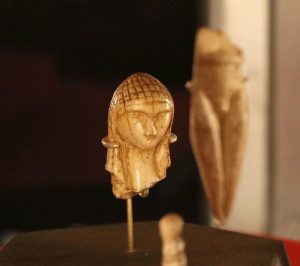
La più antica e dettagliata rappresentazione del volto femminile, finora ritrovata, riguarda la Dama di Brassempouy, ricavata da un frammento di avorio di Mammuth e sarebbe vecchia di 25.000 anni, fu scoperta nel 1892 in un piccolo villaggio della Nouvelle-Aquitaine, vicino al confine con la Spagna.
Per fornire le migliori esperienze, utilizziamo tecnologie come i cookie per memorizzare e/o accedere alle informazioni del dispositivo. Il consenso a queste tecnologie ci permetterà di elaborare dati come il comportamento di navigazione o ID unici su questo sito. Non acconsentire o ritirare il consenso può influire negativamente su alcune caratteristiche e funzioni.
Funzionale
Sempre attivo
L'archiviazione tecnica o l'accesso sono strettamente necessari al fine legittimo di consentire l'uso di un servizio specifico esplicitamente richiesto dall'abbonato o dall'utente, o al solo scopo di effettuare la trasmissione di una comunicazione su una rete di comunicazione elettronica.
Preferenze
L'archiviazione tecnica o l'accesso sono necessari per lo scopo legittimo di memorizzare le preferenze che non sono richieste dall'abbonato o dall'utente.
Statistiche
L'archiviazione tecnica o l'accesso che viene utilizzato esclusivamente per scopi statistici.L'archiviazione tecnica o l'accesso che viene utilizzato esclusivamente per scopi statistici anonimi. Senza un mandato di comparizione, una conformità volontaria da parte del vostro Fornitore di Servizi Internet, o ulteriori registrazioni da parte di terzi, le informazioni memorizzate o recuperate per questo scopo da sole non possono di solito essere utilizzate per l'identificazione.
Marketing
L'archiviazione tecnica o l'accesso sono necessari per creare profili di utenti per inviare pubblicità, o per tracciare l'utente su un sito web o su diversi siti web per scopi di marketing simili.


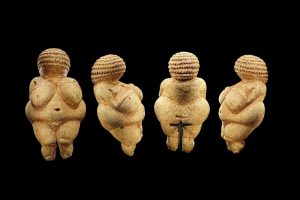 La celebre Venere di Willendo è una statuetta di forme femminili alta 11 centimetri, trovata nel 1908 in un sito paleolitico vicino a Willendorf, un villaggio della Bassa Austria. La sua età stimata è di circa 30.000 anni e fu forse usata per scopi magici o medici. Questa è la più antica rappresentazione di un corpo femminile.